 Logout
“Who is Peter?” the pastor asks.
He continues: “Peter was a fisherman, an imperfect disciple of Christ. God had faith in him and made a way for him to be an important leader. It wasn’t about Peter. It was about God in Peter. God is in us and with us.”
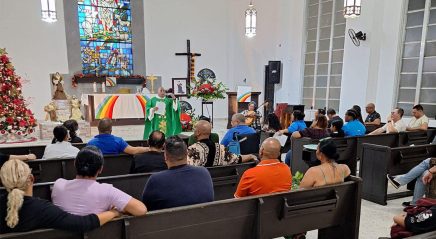
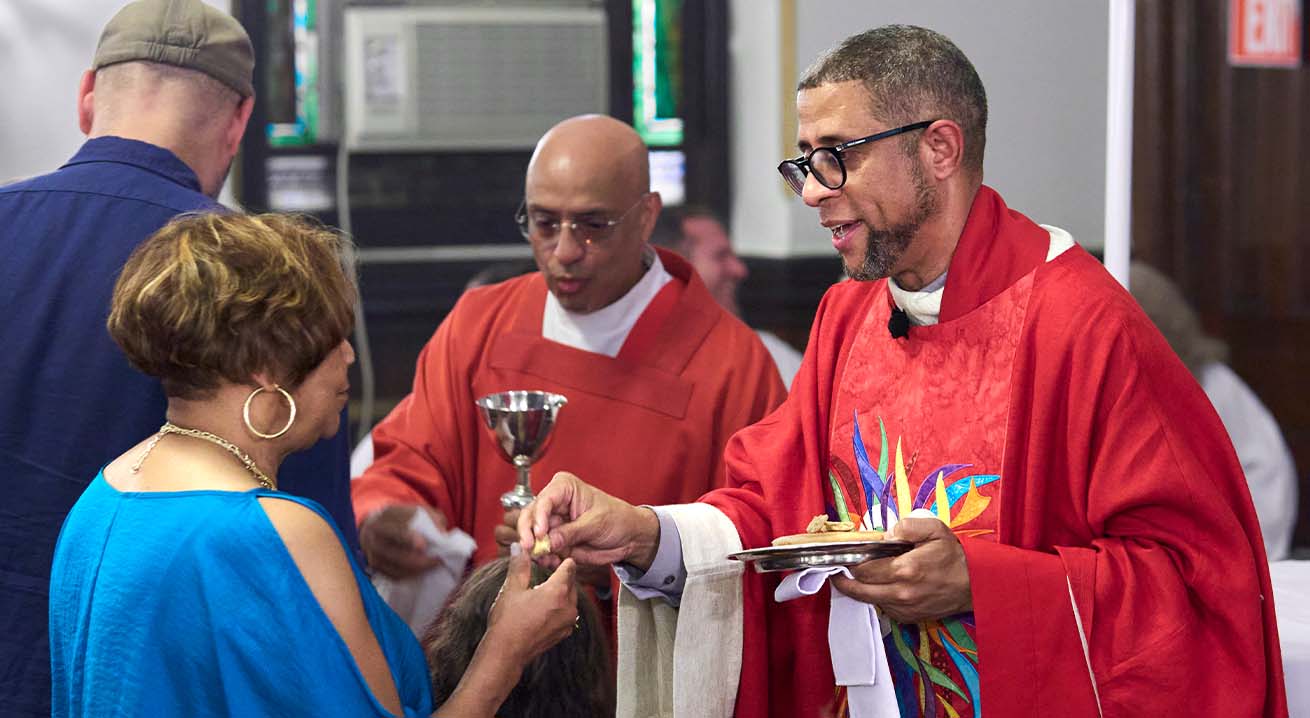
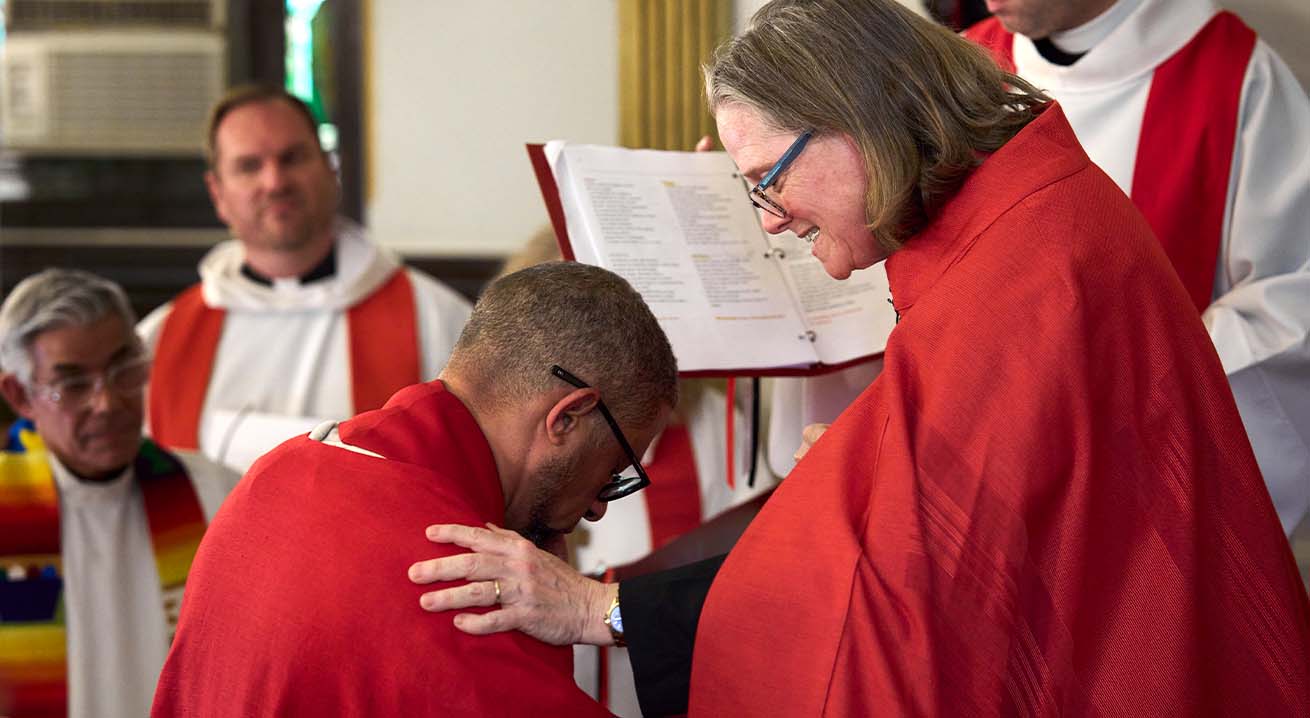
With those words, the newly ordained Deivis Ventura preached one of his first sermons at a new ministry on Manhattan’s Upper East Side. Ventura leads the Metropolitan New York Synod’s Caminos de Jesús ministry, providing programs that serve LGBTQIA+ Spanish-speaking communities in New York City. It worships at the former home of Zion-St. Mark Lutheran, a historically German congregation (offering German-English bilingual services) that closed earlier this year.
Ventura says the theme of his sermon illustrates how Caminos de Jesús (“the way of Christ”) was launched in July 2026 “God does for us,” he said. “God is making something in the church with your imperfection. It’s not about you; it’s about God in you. The grace of God.”
As mission developer, Ventura takes this message on the road, reaching out to those who don’t feel welcomed by the church or loved by Jesus. “I work with LGBTQIA+ people and invite them to church,” he said. “They often tell me, ‘We didn’t know we can go to the churches. We’ve received the news that God hates us.’
“I tell them, ‘We love you. You can worship here and take communion.’ It’s beautiful that I can offer communion to everyone.”
Ventura said his mission is to create a community that can live out the gospel in diversity. “My intention is to create not only a congregation but a system for supporting people,” he said. “The mission of the church is to preach the gospel. It’s also to support and heal people. I want to create a model for churches and congregations, a systematic process to promote Lutheran ideas about grace, salvation, sacraments and community.”
More than an open door
Ventura, a second-career pastor, was a human rights and LGBTQIA+ activist in the Dominican Republic. He came to the United States in 2017 after unsuccessfully running for his country’s congress as its first openly gay candidate. “I wanted to come to New York to start a new life in a diverse city,” he said.
After arriving in Florida, he traveled to New York a month later, where a friend invited him to attend Trinity Lutheran Church in Sunset Park, Brooklyn. The liturgy felt familiar to his Roman Catholic upbringing.
The congregation encouraged him to attend seminary. Ventura enrolled at United Lutheran Seminary and studied both online and at its Philadelphia campus. He overcame the language barrier by using Google translation tools and went on to earn a Master of Divinity degree. “I know what it’s like to worship and study and not know the language,” he said. “But if God calls you, he gives you the capacity to follow the process.”
After graduating in spring 2026, Ventura was called to Caminos de Jesús.
“Caminos is a destination community for the LGBTQIA+ to worship in their language, Spanish,” said Katrina Foster, bishop of the Metropolitan New York Synod. “On the day of Pentecost, the Holy Spirit came in such a way so that all who weren’t able to hear the good news suddenly could. Caminos is the continuation of Pentecost. The power of the Spirit rests strongly on Pastor Ventura and the saints of Caminos de Jesús.”
“I tell them, ‘We love you. You can worship here and take communion.’ It’s beautiful that I can offer communion to everyone.”
Ventura agrees: “We need to offer a ministry in this city because the Spanish community doesn’t know a lot about the Lutheran community and the grace of God.” Spanish-speaking LGBTQIA+ immigrants have often been marginalized by other churches, he explained, experiencing religious rejection, xenophobia, racism and social isolation.
“I believe that a lot of churches say that they’ve opened the door, but Caminos de Jesús has official programs, retreats, meetings and a process for introducing people to the church,” he said. “It’s more than opening the door.”
Ventura also ministers to the general population, with 30 to 40 people attending worship services. “I’m a pastor for all people,” he said. “We don’t want to be a ghetto for LGBTQIA+ people,” he said. “If this church is only open to one community, then what are we doing?
“Our vision of the church is that it’s open to everyone. Caminos de Jesús is a community underserved by other faiths.”
Ventura believes the ministry exists only by the grace of God, and he’s excited to work with other ELCA congregations.
“We believe in diversity,” he said. “I offer a community where you can be whatever you want to be or do, celebrate the faith and enjoy the gospel with us. We are living the grace of the Lord. We, the people, are in front of the cross. We’re together with people who are living in difficulties.”