 Logout
Series editor’s note: The 2026 theme for “Deeper understandings” is faithful witness in challenging times. This year, various authors will explore what it means for the ELCA, and each of us as Lutherans, to face the headwinds of societal fracture, loneliness and political contention, and to bear witness to the good news of Jesus Christ that forgives, frees and transforms not only us individually but the whole world. We hope you will be encouraged and empowered to plant your feet firmly on the rock of our faith and speak joyfully and hopefully about the power of the gospel to foster peace and justice in a world desperately in need of both.
—Kristin Johnston Largen, president of Wartburg Theological Seminary, Dubuque, Iowa, on behalf of the ELCA’s seminaries
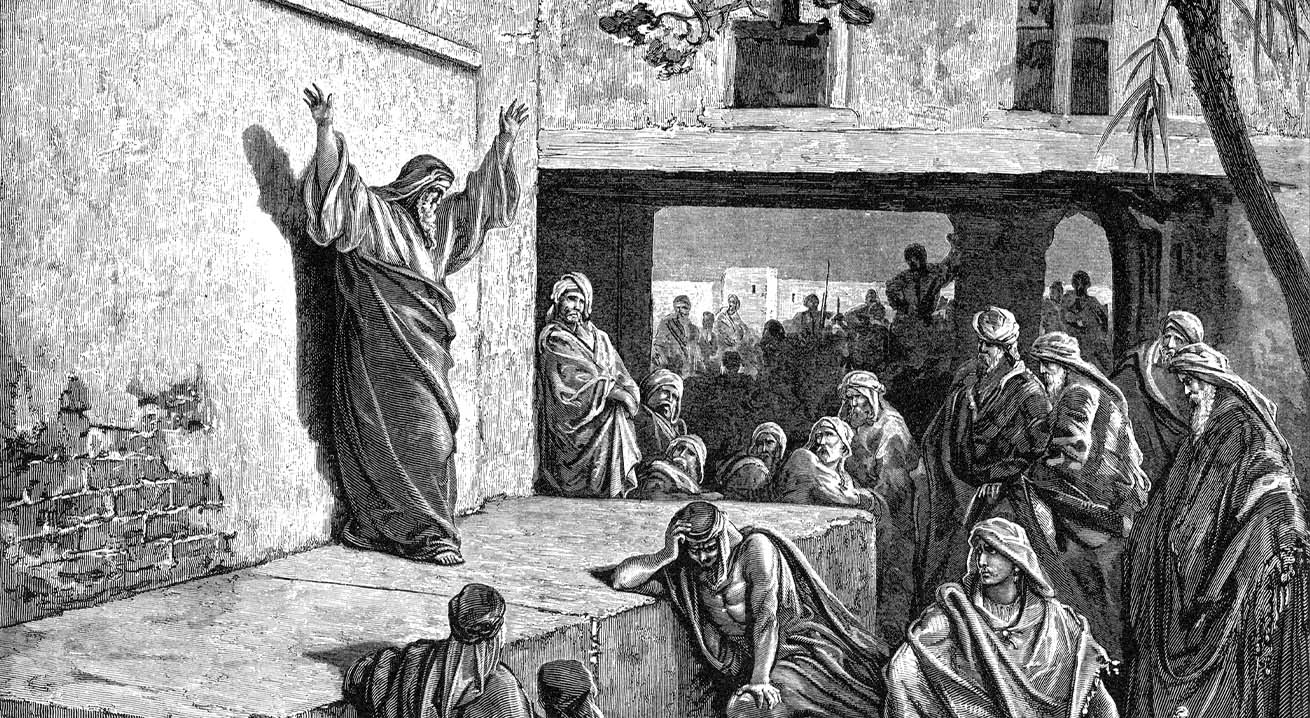
What does the Lord require of you but to do justice and to love kindness and to walk humbly with your God? (Micah 6:8).
Micah’s familiar words are not a mushy devotional slogan. They arise from a courtroom scene in which God calls the people to remember who they are and whose they are. The question is not whether they can speak the right words but whether their common life bears witness to God’s mercy, justice and truth.
That same question presses upon us now. We live in a time when public speech is loud, memory is contested and neighbors are too easily turned into threats. History is edited, dignity is denied to some, depending on the body they occupy, and even Scripture is interpreted to protect one’s privilege. At such a time as this, Christian witness cannot be reduced to mere opinion, branding or self-righteous claims of victory in an argument. Rather it requires engaged solidarity with the vulnerable, and the embodiment of the values of love, justice and life for all—regardless.
Jesus summed up what God requires of mortals when he responded to the smug lawyer who sought to know how one can get into the kingdom of God: love God and love your neighbor. Using the story of the good Samaritan, Jesus narrated how embodied justice, expansive kindness and engaged solidarity are required to show one’s faith—one’s relationship with God and others—in action. Jesus reminds us that the gospel is not merely preached, heard and admired. It is practiced. It is carried in feet that walk toward suffering, hands that bind wounds, voices that speak truth and communities that refuse to look away.
For Lutherans, this witness begins in grace. We don’t act for justice to prove our worth before God. We act because God has already met us in Christ, forgiven us, freed us and joined us to the neighbor. The water of baptism and the dust of Ash Wednesday remind us of our shared creatureliness. We are formed from the same earth, sustained by the same breath and marked by the same promise. No person is disposable. No community is outside the reach of God’s love. Through the grace and love of Jesus Christ, God’s arms hold us all together as one family.
This is why Micah’s threefold call still matters. To do justice is to ask who is being harmed and what must be repaired. To love kindness is to practice mercy—not as sentiment but as covenant loyalty, a steadfast commitment to another’s flourishing. To walk humbly with God is to relinquish domination and move at God’s pace, attentive to the least, the last and the left out.
In our time, we have a good example of engaged solidarity for embodied justice in the Barefoot Walk: Mothers’ Call for Peace. Reem Al-Hajajreh and Yael Admi, a Palestinian woman and an Israeli woman, respectively, led this march in Rome last March. When women of different cultures, communities and faiths lead the way to show how the transformative power of just-love, just-peace and just-community build peace in an unjust world, we take heart. In the face of war, oppression and injustice, we join hands in solidarity. We just-walk together, hand in hand—united as a community because we need each other, probably more now than ever.
Through the grace and love of Jesus Christ, God’s arms hold us all together as one family.
For some, this may also call to mind the protest and resilience shown in the Dandi March (or Salt March), led by Mahatma Gandhi in India in 1930. Fragile bodies took on powers of empire and overthrew them.
Being witnesses at such a time as this means refusing to separate prayer from public life, worship from neighbor-love or grace from justice. It means listening for the cries hidden beneath headlines and policies. It means asking how our congregations can become places where the wounded are believed, the stranger is welcomed, children are protected, elders are honored, creation is cherished and enemies are no longer imagined as less than human.
Micah gives us no escape into an abstract religion, no option to check out in favor of an artificial intelligence religion. Justice must be real, engaged and embodied. Indeed, our maker mandates all mortals with this demand: Do justice, love kindness and walk humbly with God. In other words, each one of us, in every place and space in which we find ourselves, is called to embody justice, expansive kindness and the walk of engaged solidarity.
Jesus sends us as witnesses, not because we have mastered the gospel but because the gospel has claimed us. At such a time as this, may our lives tell the truth of what we have seen and heard: that God’s grace is wider than fear, God’s justice is stronger than empire and God’s peace is already walking among us.
Get this column in your inbox: Visit livinglutheran.org/subscribe and sign up for the free email digest “LL Stories.” Receive the digest weekly, biweekly or monthly, and select the categories that interest you. (“Deeper understandings” is a “Theology & Beliefs” column.)