 Logout
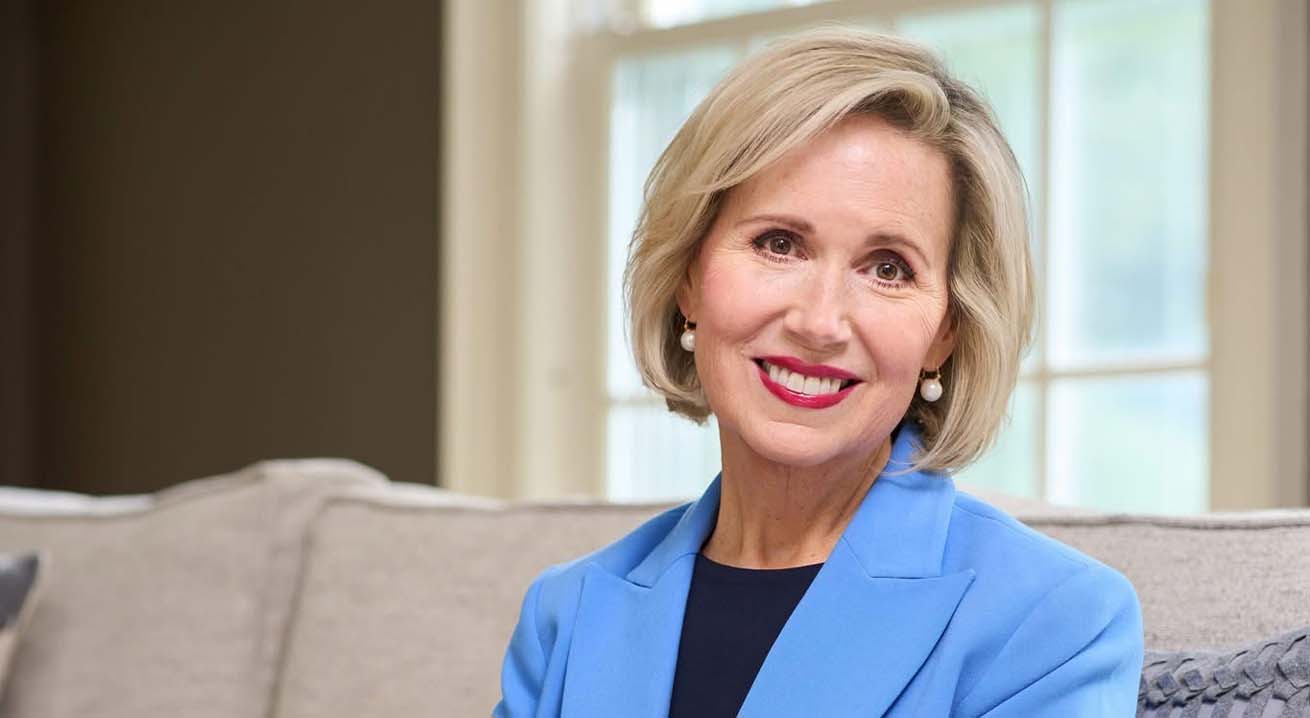
Pilgrim Lutheran Church, St. Paul, Minn.
First lady of Minnesota, former public school administrator
Growing up, the Lutheran church was the central part of my life. My parents were very committed to church. It was just the framework for our lives. A lot of the structure of our life was around helping at church and being involved in church, and we saw our parents do that.
Our church was Bethany-Elim Lutheran in Ivanhoe, Minn. My dad taught Sunday school. Once I was confirmed, the expectation was that I would teach Sunday school or play the piano for Sunday music. And my mom was a church organist. She’s 87, but she was a church organist at Bethany-Elim up until last summer. She had a brain tumor and has had surgeries and is in hospice care now. But she was a church organist up until that point and did Sunday school music.
My parents are in this little, tiny parish in this little, tiny town, which no longer has a full-time minister. Neither do several of the towns next to them. We’ve gone back to the lay-minister model. And that is working better than I ever thought that it would. My mom has said, “Gwen, it’s like Little House on the Prairie. We do all of those things in our little church now. We all own that a little bit more, and I love that.”
I’ve been having discussions with my parents about how they see their role in the church—even though they’ve been so involved their whole lives. My dad was recently president of the church council and remains very involved. They see the advantages in the lay ministry in a different way. They’ve continued to attend their Bible studies and their circles and all the different things. And real action grows out of those groups in our community, like a community thrift store and a food bank. That’s what grows out of what’s happening at church. So those have been real faith experiences for me.
When I was graduating from high school, there was not an option other than to go to an ELCA college. I have three sisters. Two of us went to Gustavus [Adolphus College in St. Peter, Minn.] and two went to Augustana [University in Sioux Falls, S.D.]. My dad’s a Gustavus graduate and my mom’s an Augsburg [University in Minneapolis] graduate. Gustavus was a great fit for me, and I became very involved.
I’m not in the pews every Sunday. I look forward to a time when that can happen again. I Zoom in to services at Pilgrim, and I have studied and done some things independent of the congregation. But I look forward to being part of that. One thing that this part of my life has done for me is to expand my view of where I see or how I worship God. Prior to this, I would say I was very focused on being in church. And I still love those spaces. I look forward to being back in a congregation in a normal way. But I’ve also experienced worship or church outside of that physical place in a different way. Because I’ve had to. I prayed for that.
It’s a journey we’re on as Lutherans, because always we’ve emphasized our personal relationship with God. We nailed the treatise on that door once, and by God, we might have to do it again, right? We’re always thinking like that a little bit. Not so much the muss and fuss [of church], but what is the essence of your faith and your relationship with God? What does that mean?
Our minister at Pilgrim, we text one another. She sends me different things to think about. There have been times that it’s like she has a sense of things [happening in our lives]. She’s had members of the congregation record videos and send them to our family, saying, “Your church family’s thinking about you and loves you, and here we are.” I try not to take too much of her time, but she ministers to me individually.
Serving on the Bishop’s Advisory Council, first with Bishop [Elizabeth] Eaton, was a really great experience. We were right in the center of information on some of the larger policy [developments], and that was very interesting to me. And now I’ll be on the council again, with Bishop [Yehiel] Curry. I’m so excited to do that, and I’ve met wonderful, engaged people. So I’m going to try to do my best again.
In my work, I use our ELCA social statements as resources. We have real statements on things—they’re excellent. I’ve done work around incarceration and prison reform, and our statement on criminal justice is a very powerful, forward-thinking, influential statement. I’ve directed a lot of non-Lutherans to it.
As Lutherans, we have some real things to offer, especially because Lutherans have influenced [my] state so much. Our refugee policies, our immigration policies, a lot of that is Lutheran-driven. So now we have to continue on that. We did it very publicly during [Operation] Metro Surge too. I’ve traced some things that I didn’t know about our church, as we’ve been doing this work, politically. “Where did this come from? How did this come to be? Why have Lutherans had success [engaging on issues] between Israel and Palestine, for example? What is it about my faith?”
In our faith, we have to have a constant renewal. Sins are washed away. We are new again. You need that a lot of times a day in this kind of work. That foundational piece, that ever-present idea that there’s a bigger picture, and you are part of a larger framework, and you are purpose-driven—that’s encouraging in renewal. I always tell my kids, “You can’t pray for a specific thing, for a new car or something like that.” You have to pray to have the ability to get to where you need to go and do the things that you need to do and watch for the signs to have the affirmation. That has guided my work.
There are more signs of hope and more reasons to be hopeful than there are not. I’ve had the chance to experience that throughout this entire country.
In the Lutheran church, we serve. And it’s important for us to find ways to serve. My parents would say, “Gwen, do the work that’s in front of you.” Growing up, I thought that meant the dishes or my homework. But as I matured, I realized what a profound idea that was and how important that was to how I saw the world. Because it’s not just about what work you choose to do, it’s the work that is in front of you—which requires you to be aware, to listen, to engage in really complex and hard things. It would be easier sometimes if we didn’t have to, but I feel that we are called by our faith to see and try to know and understand [an issue] and then to do that work. Sometimes that work has just presented itself, and that has become meaningful.
I believe you serve where you’re called to serve. [My husband, Gov.] Tim [Walz] and I are both excited for the next chapter. I don’t think there’s any position that is more important than another. I think everybody has to do what they are called to do for it to all work together. So I am listening for my next call and trying to make good decisions about that.
When you’re focused on service, that is hopeful, because there’s always much to do, and there are always others to do that work with. Our daughter is named Hope. We named her that because we feel like that’s the most powerful word in the universe. But it is also not an action plan—”I hope this happens” or “I hope that.” But it is the beginning. Very little can happen without hope. So we must nurture that in one another, and we must look for signs of that, and share that with one another everywhere. What you do matters. And I think it’s a moment for people to see that.
There are more signs of hope and more reasons to be hopeful than there are not. I’ve had the chance to experience that throughout this entire country. How that translates and how we solve problems, we’re going to have to be very serious about that.
As Lutherans, that can be a little bit uncomfortable. In the church I grew up in, we’re still working on passing the peace. “Do you really have to say it out loud? Can’t you just look at them and know we’re thinking that?” To have these kinds of conversations, I think we’re going to have to grapple with that. There are things in our faith and in our church that make us uniquely suited for this moment. I hold tight to some of those traditions, but I’m also trying to be open and flexible to how that might look or what that might mean.
I spent a lot of time this spring in the garden, because I needed that. I have the most beautiful peonies this year that I’ve ever had. And I think I just needed them this year. They came up—in spite of construction here, in spite of big things with tires rolling over them, they came up. So I went back to that because we are not in an easy time. But we cannot give up on hope and the power of it and the conversations like this. And, of course, Minnesota, during Metro Surge, how we chose to react. Everywhere I go, that’s inspired people around the world. I would say that response is faith-based in many ways. Those things give me hope.
I’m a Lutheran because I was baptized and confirmed in the Lutheran faith. It formed, and still informs, my thinking. Lutheranism, for me, is so action-orientated. It is such a call. And that has been modeled for me by so many people, that’s been nurtured and encouraged. And it’s sort of [my] North Star in that way. I never contemplated not being Lutheran. It is a faith that has allowed me to grow as I’ve grown, and it’s always instructed my worldview.